![endif]-–>!–-[if>!-–old>!-–all>
Home » Articles filed under Victorian Era
01/01/2012
Top 5 NLG Steampunk Articles 2011
Choosing my blog's Top 5 articles for 2011 wasn't easy. If I ranked them by pageview, recent articles would be at a disadvantage against those that have been published for some time.
In the end I decided to rank them by calculating the average monthly pageviews [(actual pageviews / days published) * 30 days]. As a last step I removed seasonal posts as with my formula they skewed the result. Seasonal posts are articles that might be very popular at the end of the year, but will probably be ignored during the rest of the year. The results in reverse order:
29/12/2011
Top 10 Steampunk Web Articles 2011
Everybody seems to make best of the year lists, so I'm making my own. The rules are they must be related to Steampunk, and not have been linked to elsewhere on my blog. It doesn't matter when they were published, but I must have discovered them during the past 12 months. In reverse order:
11/12/2011
08/12/2011
05/12/2011
01/12/2011
29/11/2011
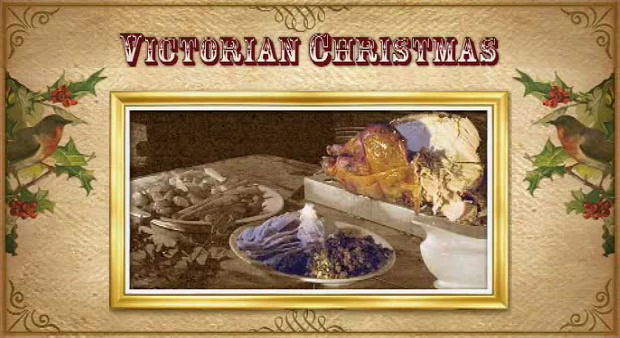
Victorian Christmas: Decorations
Some time ago I reviewed a brilliant documentary series, Victorian Farm Christmas. The producers put up some videos about making your own Victorian Christmas, however these were available only to people in the UK. These videos are now up on YouTube, so are available to everyone. Enjoy!
18/11/2011
Veteran Era Cars
![]() |
| Roper Steam Car (1863) |
The Veteran Auto Era is part of the Brass Era, and refers to automobiles manufactured before 1905. The latter part of the Brass Era for autos manufactured between 1905 and 1914 is called the Edwardian Auto Era.
At the end of the 19th century, hundreds of manufacturers all over the western world started producing a wide variety of vehicles powered by technologies including steam, electricity, and internal combustion engines. The fuels used varied, from kerosene and coal oil, to petrol and diesel.
08/11/2011
The British Museum
The British Museum is a museum of human history and culture and it's exhibits originate from all over the world.
Physician and naturalist Sir Hans Sloane collected more than 71,000 objects over his lifetime. He wanted them to be preserved intact after his death, so he bequeathed the whole collection to King George II for the nation in return for a payment of £20,000 to his heirs. The gift was accepted and on 7 June 1753, an Act of Parliament established the British Museum.
31/10/2011
St James's Park and Green Park
| St James's Park |
St James's Park and Green Park together with two other Royal Parks of London, Hyde Park and Kensington Gardens form an almost continuous green area in the centre of London.
In 1532, Henry VIII purchased an area of marshland from Eton College, through which the river Tyburn flowed. On James I's accession to the throne in 1603, he ordered the park drained and landscaped, and kept exotic animals in the park, including camels, crocodiles, and an elephant, as well as aviaries of exotic birds along the south.
25/10/2011
Hyde Park and Kensington Gardens
Hyde Park and Kensington Gardens together with two other Royal Parks of London, Green Park and St James's Park form an almost continuous "green lung" in the heart of London.
In 1536, Henry VIII acquired the manor of Hyde from the canons of Westminster Abbey and enclosed it as a deer park. It remained a private hunting ground until James I permitted limited access to gentlefolk, and appointing a ranger to take charge. In 1637 Charles I opened the park to the general public.
In 1728 Queen Caroline carved Kensington Gardens out of the western section of Hyde Park. During the next ten years fashionable features including the Round Pond, formal avenues, and a sunken Dutch garden were added.
15/10/2011
Natural History Museum
Richard Owen, Superintendent of the natural history departments of the British Museum saw that the departments needed more space. Since space at the British Museum site was limited, this meant they needed a separate building. Land in South Kensington was purchased, and in 1864 a competition was held to design the new museum.
14/10/2011
Oxford Street
![]() |
| Oxford Street in 1875 |
Oxford Street is a major road in the City of Westminster in the West End of London. It runs for approximately two and a half kilometres from Marble Arch at the north east corner of Hyde Park, to St Giles Circus, at the intersection with Charing Cross Road and Tottenham Court Road. Roughly halfway along Oxford Street is Oxford Circus, a busy intersection with Regent Street.
08/08/2011
Mobs and Riots in Victorian London
During Victorian times, Hyde Park and Trafalgar Square were frequently disturbed by mobs and rioters, until they became the recognised place in which to air popular discontent or grievance.
Sunday Trading Riots
In 1855, 150,000 people assembled in Hyde Park, and riots broke out in protest over the Sunday Trading Bill, which forbade buying and selling on a Sunday, the only day working people had off.
26/07/2011
Anarchists: Terrorist Attacks in Victorian and Edwardian Britain
![]() |
| Winston Churchill (highlighted) at the Sydney Street Siege |
In Victorian and Edwardian times there was another terrorist threat besides the Fenians - anarchists and revolutionaries.
In the 1840's movements for democracy swept Europe - Italy, France, and Poland stood on the brink of revolution and thinkers and activists encouraged uprisings. Many of Europe’s revolutionaries and anarchists ended up in exile in comparatively liberal Britain: it became the home for other people’s ‘terrorists’.
25/07/2011
The Fenians: Terrorist Attacks in Victorian and Edwardian Britain
![]() |
| Police inspect the scene of the Clerkenwell explosion (1867) |
Terrorist attacks are thought by many people to be a relatively recent phenomenon, however, this is not the case. In Victorian and Edwardian times there were two terrorist threats, the Fenians, and anarchists.
The Fenians were Irish Nationalists organised in 1858 as the Irish Republican Brotherhood in Ireland. They were supported, mainly financially, by the Clan na Gael (Fenian Brotherhood) which formed in 1867 in the United States. The Fenians conducted what became known as the Fenian Dynamite Campaign in the 1880's.
18/07/2011
Scotland Yard
Scotland Yard is the London Police elite investigation agency mentioned in Sherlock Holmes and other stories. But what is it really, and why is it called so?
07/07/2011
Mad as a Hatter? Millinery and Mercury
![]() |
| The Hatter character in Alice's Adventures in Wonderland (1865) |
In the late 14th and 15 centuries hats started to be worn regularly. During that period hats for men were considered an important fashion item, unlike women’s hats which only became considered as a fashion item in the 18th Century.
Millinery has existed in Britain since the 1700's. In English courts the term milliner was used and this was derived from the term for travelling haberdashers from the Duchy of Milan in Italy. These travelling sales people sold 'Millayne bonnets' and all the items necessary to dress, and were called millainers.
05/07/2011
Mechanical Singing Bird Automatons
Last Saturday an acquaintance showed me his antique mechanical birds in a cage. I was truly amazed when he wound up this gizmo and the two birds started moving their beaks, heads, and tails (see video below). He said it's around a hundred years old, and the birds probably should sing too.
03/07/2011
The British Parliament
![]() |
| The crowned portcullis gained widespread use as the emblem of the Houses of Parliament in the 19th century. |
This is a follow up to my Parliament vs Monarchy article, and it attempts to explain the British parliamentary system. The British legislative authority (known as the Crown-in-Parliament) has three separate elements: the Monarch, the House of Lords, and the House of Commons.
The House of Lords (also known as the Upper House) is made of two different types of members: the Lords Spiritual (senior bishops of the Church of England) and the Lords Temporal (members of the Peerage). Members of the House of Lords are not elected democratically, but are